


2026年5月11日
The Hidden Connection Between Missing Molars, Facial Structure, and Dental Implants
Why Does Your Face Look Older After Losing a Back Tooth?
The Hidden Connection Between Missing Molars, Facial Structure, and Dental Implants
When people think about aging, they usually focus on skin, wrinkles, or facial volume loss. Many invest in skincare, cosmetic treatments, or facial contouring in hopes of maintaining a youthful appearance.
But there is one important factor that is often overlooked:
Your teeth.
More specifically, your back teeth.
At Ginza ONE Dental & Orthodontics, many patients come to us saying:
・“My face suddenly looks more tired.”
・“My jawline feels less sharp than before.”
・“I feel like my mouth area is collapsing.”
・“One side of my face looks different.”
・“I lost a molar years ago, but I didn’t think it mattered.”
In many of these cases, the issue is not just aging.
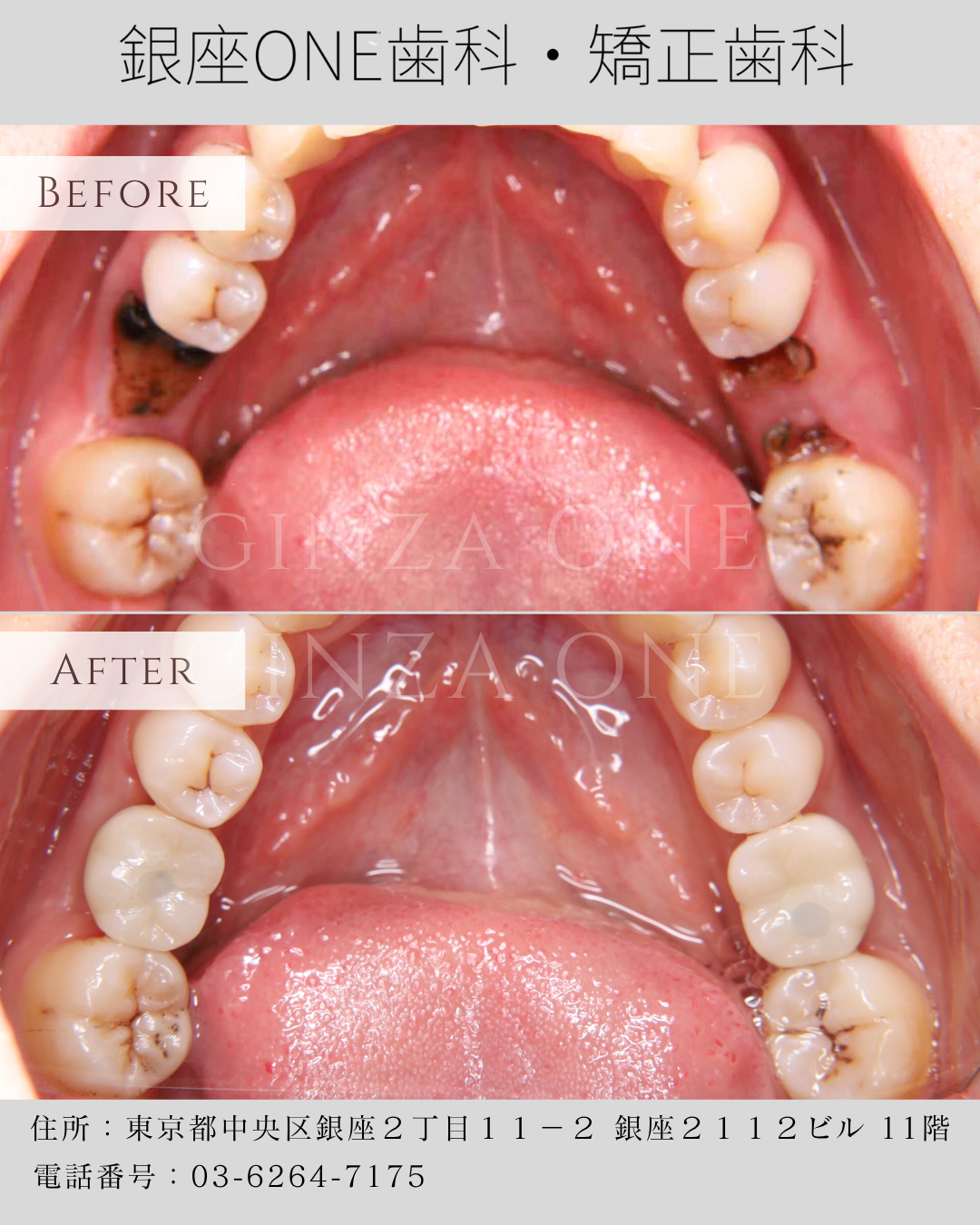
It is the long-term effect of losing a back tooth and leaving it untreated.
A missing molar may seem like a small problem at first, especially because it is hidden when you smile. However, back teeth play a critical role in supporting your bite, jaw position, facial balance, and even bone structure.
Over time, losing just one molar can create a chain reaction throughout the entire mouth and face.
This is why dental implants are not simply cosmetic treatments. They are functional restorations designed to rebuild oral balance and preserve long-term facial support.
Why Back Teeth Matter More Than Most People Think
Front teeth are visible, so people naturally pay attention to them.
Back teeth, on the other hand, are often ignored.
Many patients assume:
・“I can still chew.”
・“No one can see it.”
・“It’s only one tooth.”
・“I’ll fix it later.”
But molars are actually the foundation of your bite.
They are responsible for:
・Supporting chewing force
・Stabilizing the jaw
・Maintaining bite alignment
・Protecting surrounding teeth
・Supporting facial muscles
・Preserving jawbone volume
Your molars absorb most of the pressure generated during chewing.
When one is missing, the balance of force changes immediately.
Even if you do not notice symptoms right away, your mouth begins adapting to the missing tooth almost immediately.
Unfortunately, those adaptations are usually harmful over time.
What Happens After Losing a Back Tooth?
1. You Begin Chewing on One Side
One of the first changes after losing a molar is unconscious one-sided chewing.
Most people automatically shift chewing to the opposite side because it feels easier and more comfortable.
At first, this may not seem like a problem.
But over time, uneven chewing can create:
・Muscle imbalance
・Jaw tension
・Facial asymmetry
・Uneven wear on teeth
・Bite instability
Some patients notice:
・One side of the jaw feels tighter
・One side of the face looks larger
・Clicking or discomfort in the jaw joint
・Increased clenching or grinding
The muscles around the jaw and lower face are directly connected to chewing habits. When those muscles become unbalanced, facial appearance can gradually change as well.
2. Surrounding Teeth Start Shifting
Teeth are not permanently fixed in place.
They naturally move over time, especially when space becomes available.
After losing a back tooth:
・Adjacent teeth may tilt into the gap
・Opposing teeth may over-erupt
・Bite alignment can collapse
・Food trapping may increase
This process often happens slowly over several years.
Patients are often surprised when we show them how much movement has already occurred after leaving a missing tooth untreated.
Once teeth shift significantly, restoring the area becomes more complicated.
In some cases, orthodontic treatment may be necessary before placing an implant.
3. Jawbone Shrinkage Begins
One of the most important consequences of tooth loss is bone resorption.
Natural teeth stimulate the jawbone every time you chew.
When a tooth is lost, that stimulation disappears.
As a result, the bone in that area gradually shrinks.
This process can lead to:
・Reduced facial support
・A “sunken” appearance
・Sagging around the mouth
・Changes in lower facial height
・Premature aging of the face
Many people think facial aging only comes from skin changes.
In reality, bone loss inside the mouth can dramatically affect facial structure.
This is one reason why people who have been missing teeth for many years often appear older around the mouth and jawline.
Why Missing Molars Can Make the Face Look “Collapsed”
The lower third of the face relies heavily on dental support.
Your teeth and jawbone help maintain:
・Facial height
・Lip support
・Jawline definition
・Muscle balance
・Proper mouth posture
When a molar is lost and bone shrinks, the surrounding tissues lose structural support.
This may create:
・Hollow cheeks
・Drooping mouth corners
・A shorter lower face
・Deeper smile lines
・A tired or aged appearance
Many patients describe it as:
“My face just doesn’t look lifted anymore.”
Even though the issue starts inside the mouth, the effects can become visible externally over time.
“I Can Still Eat” Does Not Mean Everything Is Fine
A very common misconception is:
“If I can still chew, treatment is not urgent.”
But being able to chew does not mean the mouth is functioning properly.
Many people compensate by:
・Chewing on one side
・Overusing front teeth
・Clenching harder
・Adjusting jaw position unconsciously
These compensations may work temporarily, but they place excessive stress on other structures.
Over time, this can contribute to:
・Cracked teeth
・Gum recession
・TMJ discomfort
・Bite collapse
・Additional tooth loss
The longer a missing tooth is left untreated, the more complex future treatment may become.
Why Dental Implants Are Often the Best Long-Term Solution
There are several options for replacing missing teeth, including:
・Dental bridges
・Removable dentures
・Dental implants
Among these options, dental implants are often considered the closest replacement to a natural tooth.
Unlike bridges, implants do not require aggressively cutting adjacent healthy teeth.
Unlike removable dentures, implants are fixed securely in the jawbone.
Dental implants help restore:
・Chewing ability
・Bite stability
・Bone stimulation
・Facial support
・Long-term oral function
This is especially important for molars because back teeth endure strong chewing forces every day.
Dental Implants and Bone Preservation
One major advantage of implants is their ability to help preserve jawbone volume.
Because implants integrate with the bone, they can provide stimulation similar to natural tooth roots.
This helps reduce ongoing bone loss after tooth extraction.
Maintaining bone structure is important not only for oral health, but also for facial aesthetics.
Patients often focus on the visible crown of the implant.
But from a long-term perspective, preserving bone and bite balance is equally important.
Dental Implant Treatment Is About More Than Replacing a Tooth
At Ginza ONE Dental & Orthodontics, we believe successful implant treatment is never just about “filling a gap.”
Every patient’s bite, bone structure, and oral condition are different.
Before implant treatment, we carefully evaluate:
・Bone quantity and quality
・Gum condition
・Bite relationship
・Adjacent teeth
・Jaw position
・Long-term stability
・Potential orthodontic considerations
In some situations, moving teeth orthodontically before implant placement creates a healthier and more stable outcome.
This is why comprehensive diagnosis is essential.
Our goal is not simply to place an implant quickly.
Our goal is to create a stable, functional, and natural-looking result that can last for many years.
Early Treatment Often Leads to Better Outcomes
Many patients postpone implant consultation because:
・They are busy
・The missing tooth does not hurt
・They are nervous about surgery
・They think one tooth is not important
However, earlier treatment often provides significant advantages.
When bone loss and tooth shifting are minimal:
・Implant placement is usually simpler
・Treatment time may be shorter
・Fewer additional procedures may be necessary
・Long-term stability may improve
Waiting too long can sometimes increase the need for:
・Bone grafting
・Orthodontic treatment
・Bite reconstruction
Addressing the issue earlier can help preserve both oral health and facial balance.
Signs You Should Not Ignore
You may benefit from an implant consultation if you notice:
・Missing back teeth
・Difficulty chewing evenly
・One-sided chewing habits
・Jaw fatigue
・Bite changes
・Food trapping
・Facial asymmetry
・A “sunken” appearance around the mouth
・Loss of jawline definition
Even if these changes seem minor, they may indicate that your bite and oral structure are becoming unstable.
Restoring Function Can Also Restore Confidence
Many people underestimate the emotional effects of tooth loss.
Patients often tell us they feel:
・Less confident smiling
・Older than before
・Uncomfortable eating socially
・More aware of facial changes
Restoring missing teeth can improve not only oral function, but also comfort, confidence, and quality of life.
When the bite becomes balanced again, many patients feel their face looks healthier and more supported as well.
Comprehensive Implant Care at Ginza ONE Dental & Orthodontics
At Ginza ONE Dental & Orthodontics, we provide comprehensive implant treatment designed around long-term oral stability and facial harmony.
We focus on:
・Detailed diagnosis
・Functional bite analysis
・Bone preservation
・Natural aesthetics
・Long-term maintenance
Our approach combines restorative dentistry, orthodontic perspectives, and comprehensive treatment planning to create individualized solutions for each patient.
Whether you recently lost a tooth or have been missing a molar for many years, understanding the condition early can help prevent more complex problems in the future.
A Missing Tooth Is Never “Just One Tooth”
The mouth functions as a connected system.
When one tooth disappears, the effects rarely stay isolated.
A missing molar can influence:
・Chewing patterns
・Muscle balance
・Jaw position
・Bone structure
・Facial appearance
・Long-term oral health
If you have been living with a missing back tooth, now may be the right time to evaluate how it is affecting your bite, facial structure, and future oral health.
Because preserving your smile is not only about appearance.
It is about maintaining the foundation that supports your entire face.
About Ginza ONE Dental & Orthodontics
Ginza ONE Dental & Orthodontics is a fully private, appointment-based dental clinic located in the heart of Ginza, Tokyo.
We provide a calm and personalized environment, ensuring each patient receives attentive and high-quality care.
With cutting-edge digital technology, we specialize in orthodontics, implants, veneers, and aesthetic restorative dentistry.
Our multilingual team (Japanese, English, and Chinese) welcomes both local and international patients with comfort and trust.
“With precision, empathy, and technology — we create confident smiles that last.”
This is the philosophy behind everything we do at Ginza ONE Dental & Orthodontics.
📍Clinic: Ginza ONE Dental & Orthodontics
🏢 Address: Ginza 2112 Bldg. 11F, 2-11-2 Ginza, Chuo-ku, Tokyo
🚉 2 min walk from Ginza-itchome Station / 7 min from Ginza Station
🗓️ Book your appointment here: https://reservation.stransa.co.jp/837f35ac654c81871933f518c55bdf23
🌐 Homepage:www.ginza-onedental.com