


2026年2月22日
A Minimally Invasive Dental Implant Option Without Large Gum Incisions
When patients hear the word dental implant, many immediately feel anxious.
“Is implant surgery painful?”
“Will my face swell?”
“How long is the recovery time?”
“Is it a major operation?”
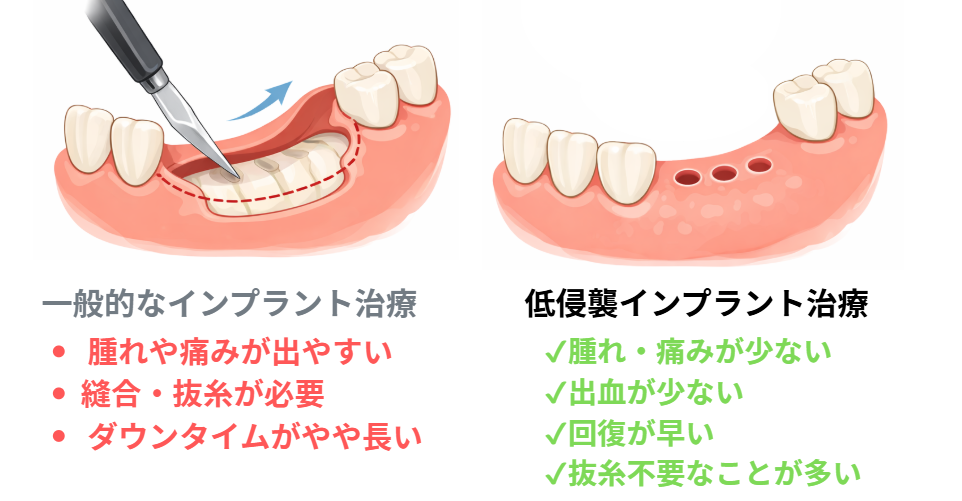
These concerns are completely understandable. For many years, traditional implant surgery involved incising the gums to expose the jawbone before placing the implant. While effective, this approach could lead to post-operative swelling, discomfort, and downtime—especially in more complex cases.
However, modern dentistry has evolved significantly.
Today, minimally invasive dental implant treatment offers a more comfortable, precise, and patient-friendly alternative. With advanced 3D CT imaging, digital treatment planning, and the use of a surgical guide, implant placement can often be performed with reduced trauma to the surrounding tissues.
This article explains:
・What minimally invasive dental implants are
・How digital planning improves safety and precision
・The role of surgical guides in implant accuracy
・Why Straumann implants are globally trusted
・Who is a candidate for this approach
・What to expect before, during, and after treatment
What Is a Minimally Invasive Dental Implant?
A minimally invasive dental implant is a treatment approach designed to reduce surgical trauma while maintaining high precision and long-term stability.
In conventional implant surgery, the dentist makes an incision in the gum tissue to directly visualize the bone. While this method is reliable, it may result in:
・More bleeding
・Greater swelling
・Longer surgical time
・Extended recovery
With modern digital technology, we can now plan implant placement in advance using 3D CT scans. This allows us to evaluate:
・Bone volume and density
・Exact nerve location
・Sinus position (for upper jaw cases)
・Optimal implant angle and depth
By carefully designing the procedure before surgery, we minimize unnecessary tissue manipulation during the actual treatment.
In selected cases, this approach allows for flapless or minimal-incision implant placement, reducing post-operative discomfort and downtime.
The Importance of 3D CT Imaging in Implant Planning
Successful dental implant treatment begins with accurate diagnosis.
Traditional two-dimensional X-rays provide limited information. In contrast, 3D CT imaging offers a comprehensive view of the jawbone structure. This enables precise assessment of:
・Bone thickness
・Bone height
・Bone quality
・Anatomical limitations
With this data, we perform digital simulation before surgery. We determine:
・The exact implant position
・The correct angulation
・The ideal depth for long-term stability
・The prosthetic-driven placement for optimal function and esthetics
This planning stage significantly increases predictability and reduces surgical risks.
What Is a Surgical Guide?
A key component of minimally invasive implant treatment is the surgical guide.
A surgical guide is a custom-made, mouthpiece-like device fabricated based on the digital treatment plan. It fits securely over the patient’s teeth or gums and contains small guiding sleeves that direct the implant drills precisely according to the pre-planned position.
Benefits of Using a Surgical Guide
・Transfers digital planning accurately into clinical execution
・Reduces human error
・Minimizes deviation in angle or depth
・Shortens surgical time
・May allow smaller or no large incisions
・Enhances safety around nerves and sinus areas
Instead of relying solely on visual estimation and manual judgment, the procedure becomes data-driven and highly controlled.
This precision is one of the reasons many patients report that the surgery felt quicker and more comfortable than expected.
Why Precision Matters in Dental Implant Surgery
Dental implants are not simply screws placed into bone. They are long-term functional restorations that must support chewing forces for decades.
Even slight misalignment can affect:
・Bite balance
・Crown positioning
・Gum contour
・Long-term stability
・Implant longevity
By combining digital simulation with surgical guide technology, we ensure that implant placement is prosthetically driven—meaning the final crown design is considered from the beginning.
This comprehensive planning improves both function and esthetics.
Straumann Implants: A Globally Trusted System
The choice of implant system also plays a critical role in long-term success.
We use Straumann implants, one of the world’s leading implant brands with extensive clinical research and long-term evidence.
Why Straumann?
・Excellent bone integration (osseointegration)
・Advanced surface technology for faster healing
・Strong long-term clinical documentation
・High precision manufacturing standards
・Used in over 70 countries worldwide
Dental implants are a long-term investment in oral health. Choosing a system with proven durability and scientific backing enhances confidence and long-term predictability.
Who Is a Good Candidate for Minimally Invasive Implant Treatment?
Minimally invasive dental implants may be suitable for patients who:
・Feel anxious about surgery
・Want to reduce swelling and downtime
・Cannot take extended leave from work
・Prefer a digitally planned, evidence-based approach
・Seek long-term stability and high precision
However, not every case can be treated completely flapless.
Factors such as:
・Severe bone loss
・Active periodontal disease
・Need for bone grafting
・Complex anatomical conditions
may require alternative techniques.
This is why thorough examination and individualized planning are essential.
What to Expect During the Treatment Process
1. Consultation and Examination
We begin with a detailed consultation, medical history review, and 3D CT imaging.
2. Digital Planning
Using specialized software, we simulate the implant placement and design the surgical guide.
3. Surgical Procedure
On the treatment day:
・Local anesthesia is administered
・The surgical guide is positioned
・The implant is placed according to the digital plan
In suitable cases, gum incision is minimized.
4. Healing Period
The implant integrates with the bone over several weeks to months.
5. Final Restoration
A custom crown is attached, restoring function and esthetics.
Does Minimally Invasive Mean “Risk-Free”?
No surgical procedure is completely without risk.
Minimally invasive implant treatment does not mean “simplified” or “casual.” It requires:
・Advanced imaging
・Careful case selection
・Precise digital planning
・Clinical expertise
Safety remains the top priority.
Our philosophy is not simply to avoid cutting—but to avoid unnecessary trauma while maintaining optimal treatment outcomes.
Changing the Image of Dental Implants
Fear often comes from uncertainty.
When patients understand:
・How the procedure is planned
・How precision is ensured
・What materials are used
・What the recovery process involves
their anxiety significantly decreases.
Dental implants are not just about replacing a missing tooth. They restore:
・Comfortable chewing
・Facial structure support
・Confidence in speaking and smiling
・Long-term oral health
Modern minimally invasive implant techniques represent the evolution of dentistry—where technology, safety, and patient comfort work together.
From “Implant = Scary” to “Implant = Reliable”
The perception that “implant equals scary surgery” is often based on outdated information.
With:
・3D CT diagnostics
・Digital simulation
・Surgical guide technology
・Straumann implant systems
・Individualized treatment planning
implant therapy has become more predictable and patient-centered than ever before.
If you are considering dental implants but feel uncertain, we encourage you to schedule a consultation.
Let us evaluate your condition, explain your options clearly, and design a treatment plan tailored to you.
Replacing a missing tooth is not only about function—it is about restoring quality of life.
Minimally invasive dental implants may be the reassuring choice you have been looking for.
About Ginza ONE Dental & Orthodontics
Ginza ONE Dental & Orthodontics is a fully private, appointment-based dental clinic located in the heart of Ginza, Tokyo.
We provide a calm and personalized environment, ensuring each patient receives attentive and high-quality care.
With cutting-edge digital technology, we specialize in orthodontics, implants, veneers, and aesthetic restorative dentistry.
Our multilingual team (Japanese, English, and Chinese) welcomes both local and international patients with comfort and trust.
“With precision, empathy, and technology — we create confident smiles that last.”
This is the philosophy behind everything we do at Ginza ONE Dental & Orthodontics.
📍Clinic: Ginza ONE Dental & Orthodontics
🏢 Address: Ginza 2112 Bldg. 11F, 2-11-2 Ginza, Chuo-ku, Tokyo
🚉 2 min walk from Ginza-itchome Station / 7 min from Ginza Station
🗓️ Book your appointment here: https://reservation.stransa.co.jp/837f35ac654c81871933f518c55bdf23
🌐 Homepage:www.ginza-onedental.com