



2026年9月27日
When starting clear aligner treatment, you may notice that your next aligner feels tighter than expected, does not fully fit your teeth, or appears slightly lifted in one particular area.
Many patients wonder, “Is there something wrong with the aligner?”
However, the fit of a clear aligner is not determined by the aligner alone. Daily wearing time, eating and snacking habits, and even the way you insert and remove the aligner can affect how well treatment progresses.
At Ginza ONE Dental & Orthodontics, we would like to explain some common reasons why an aligner may not fit as expected and what you should do when this happens.
Why Is Wearing Time Important?
One of the major advantages of clear aligners is that they can be removed when necessary. However, this convenience also means that wearing time can easily become shorter than expected.
For example, some people remove their aligners not only for meals, but also for snacks, coffee, drinks, or other occasions throughout the day. Each time the aligner is removed, the total wearing time becomes shorter.
Clear aligner treatment is designed based on a specific treatment plan. Therefore, wearing the aligners consistently according to your dentist’s instructions is important for maintaining the planned progress of tooth movement.
Rather than focusing only on changing to the next aligner on schedule, it is important to make sure that each stage of treatment is progressing properly.
Can Frequent Snacking Affect Aligner Treatment?
Eating habits can also affect daily wearing time.
Clear aligners are generally removed during meals. If you eat or snack frequently throughout the day, you may end up removing your aligners several times.
This can make it difficult to maintain sufficient wearing time.
If possible, organizing meals and snacks into a manageable schedule can make it easier to keep your aligners in place for longer periods.
Of course, individual treatment plans may differ, so always follow the instructions provided by your dentist.
What If One Part of the Aligner Is Lifted?
Another common concern is when an aligner appears to fit well in most areas but is slightly lifted around one tooth.
This may indicate that the actual tooth movement is not progressing exactly as planned.
Clear aligners are manufactured according to a planned position of the teeth. For the aligner to fit properly, the teeth need to move sufficiently toward the planned position at each stage.
If the previous stage has not progressed enough, the next aligner may feel unusually tight or may not fit completely.
In these situations, do not assume that you simply need to apply more force.
Should You Force an Aligner Into Place?
If your next aligner does not fit, avoid forcing it into position.
You should also avoid changing to the next aligner earlier than scheduled simply because you want to continue the treatment plan.
Depending on the situation, your dentist may recommend continuing with the previous aligner, extending the wearing period, checking the fit, or reviewing the treatment plan.
If an aligner suddenly becomes difficult to wear, it is best to contact your dentist before making changes yourself.
Proper Insertion and Removal Also Matter
The way you handle your aligners is another important point.
Repeatedly pulling the aligner from the same area or using excessive force may cause the aligner to deform or become damaged.
When inserting an aligner, make sure it is positioned correctly and gently press it into place as instructed by your dental professional.
When removing it, use the recommended technique rather than pulling strongly from one side.
Small daily habits can make a difference in maintaining the condition and fit of your aligners.
How Ginza ONE Dental & Orthodontics Supports Aligner Treatment
At Ginza ONE Dental & Orthodontics, we carefully evaluate each patient’s teeth, bite, and overall orthodontic needs before developing an individualized treatment plan.
For Invisalign and other clear aligner treatments, digital intraoral scans can be used to accurately capture the condition of the teeth and help visualize the planned tooth movement.
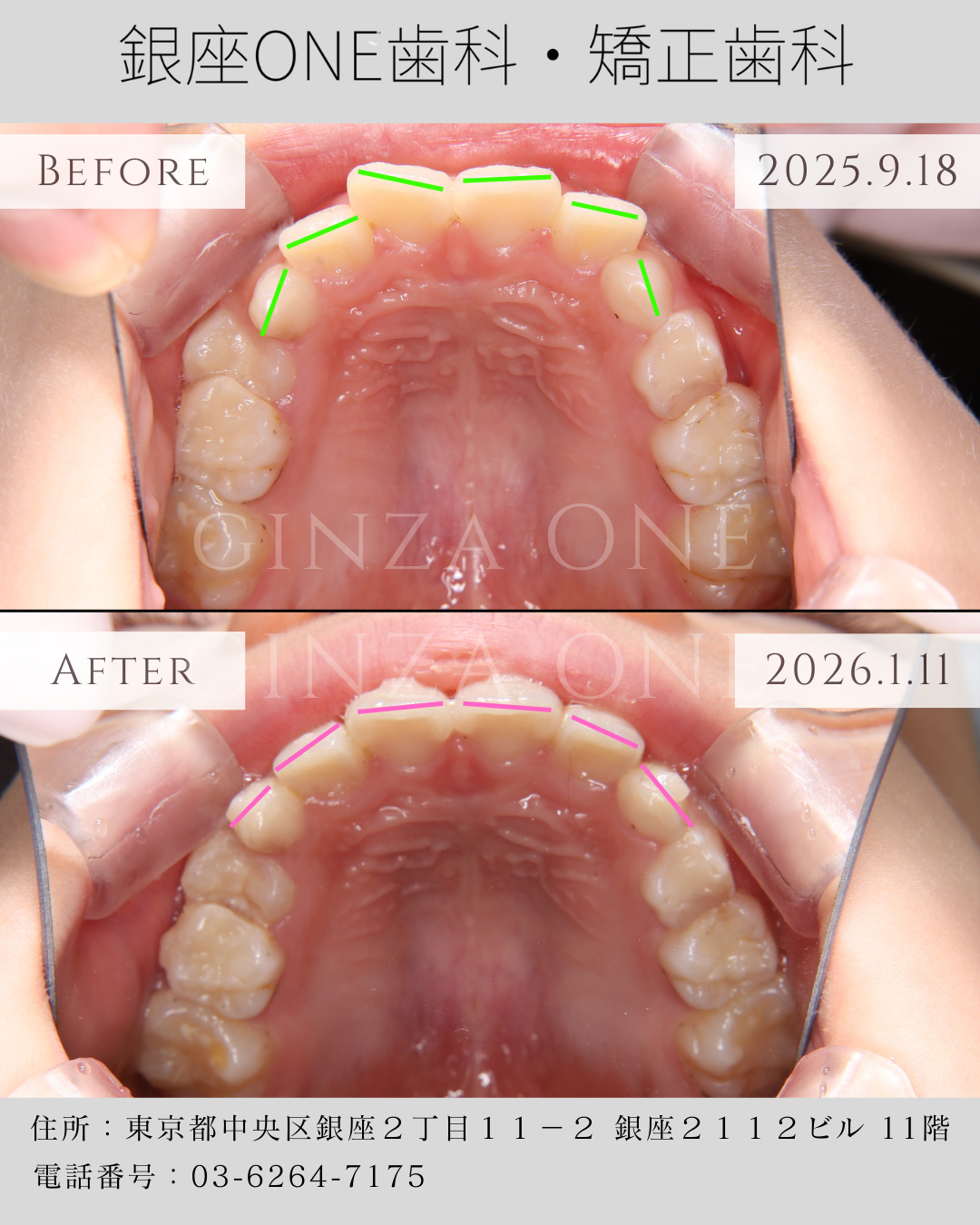
During treatment, we also monitor how the teeth are actually moving compared with the treatment plan.
If necessary, the treatment plan can be reviewed and adjusted according to the patient’s progress.
Clear aligner treatment is not simply about wearing a new aligner every few weeks. Consistent wearing habits, proper aligner care, and regular dental monitoring all play important roles in maintaining smooth treatment progress.
What Should You Do If Your Aligner Does Not Fit?
If your aligner suddenly feels much tighter than usual, does not fully fit, or is lifted in one area, do not try to solve the problem by force.
It is better to consult your dentist and have the fit and tooth movement checked.
Clear aligner treatment works best when the treatment plan, actual tooth movement, and daily wearing habits remain well coordinated.
If you are considering Invisalign or clear aligner treatment in Ginza, Ginza ONE Dental & Orthodontics provides individualized orthodontic treatment planning based on each patient’s dental condition and goals.